The Two Markets Hiding Inside Every Crestview Listing
September 3, 2026
September 3, 2026
Pull up ten Crestview listings on a Saturday morning and something stops making sense. Two houses sit four blocks apart, both zoned to the same Austin ISD schools, both a five-minute walk from North Loop Boulevard. One lists for $950,000 in a home under 1,500 square feet. The other lists for roughly the same price in a home twice that size. Run the price-per-square-foot math and you get two entirely different numbers describing what is supposedly the same neighborhood.
It is not a pricing error. It is what happens when a single, small, 78757 zip code is quietly running two housing markets at once, and every published median tries to average them into one figure that fits neither.
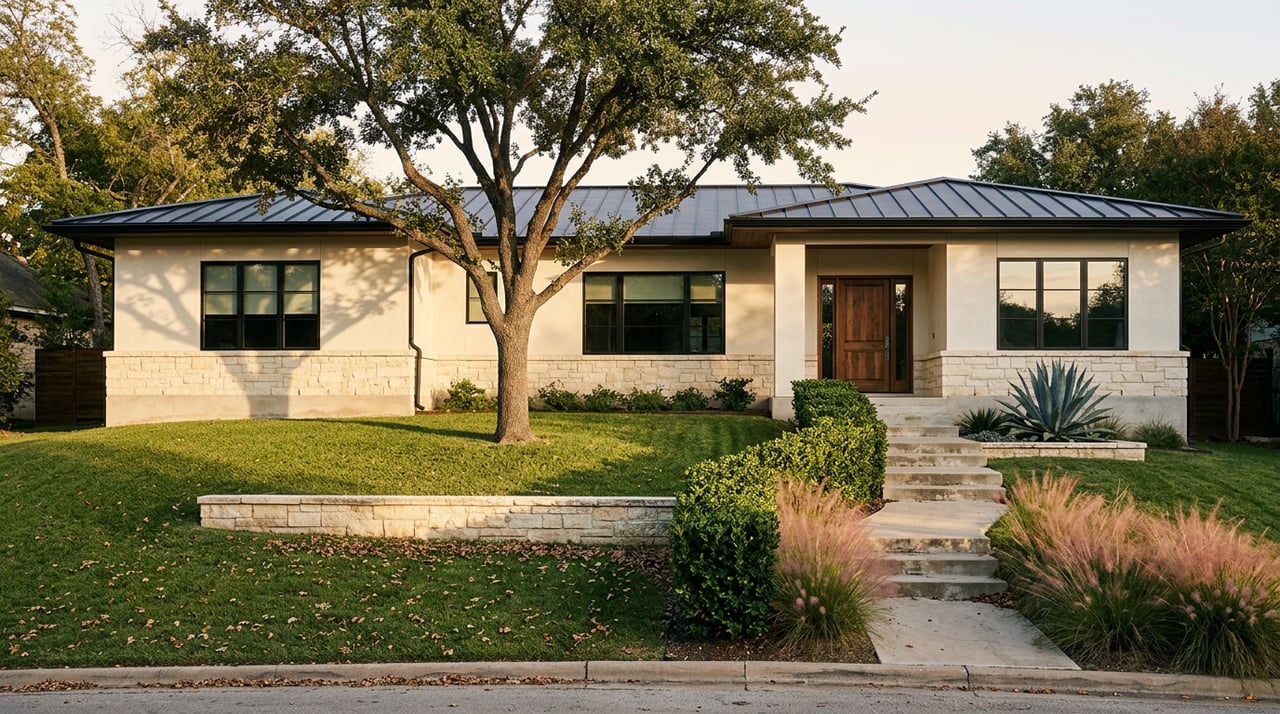
Crestview sits in the square bounded by Burnet Road to the west, North Lamar Boulevard to the east, Anderson Lane to the north, and Justin Lane to the south, a footprint developed in the late 1940s and through the 1950s and 60s on what had been dairy farmland. The original housing stock reflects that era: simple ranch and bungalow homes, most under 1,300 square feet when built, many still standing with their original hardwood floors and modest footprints intact.
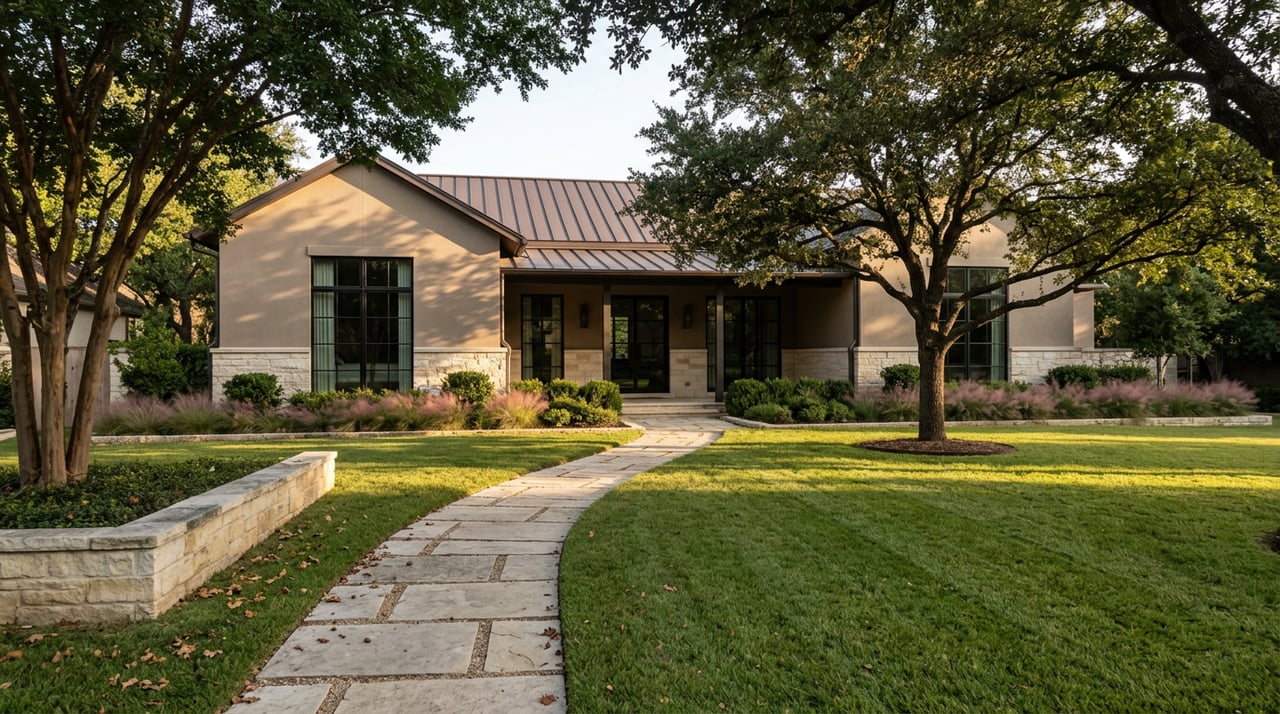
That original stock is now trading alongside brand-new construction on the same streets. Recent listings on Rutgers Avenue, Piedmont Avenue, and West St. Johns Avenue show finished new homes running 3,000 to 3,600 square feet, several with detached casitas or guest quarters, built where a 1950s ranch used to sit. Both the untouched bungalow and the new 3,600-square-foot build count as a "Crestview sale" in the same monthly market report.
That is the mechanism behind a number that looks alarming at first glance. Public listing data covering July 2026 showed Crestview's median price per square foot at $445, a 17 percent drop from the same month a year earlier. Read on its own, that looks like a neighborhood losing value fast. But a separate MLS-based read covering roughly the same window put the price-per-square-foot benchmark closer to $476, and the trailing twelve-month median sold price at $650,000 against a current pool of just 13 active listings. Two snapshots of the same neighborhood, taken within weeks of each other, landing seven percent apart on the same metric.
The gap is not measurement error. It is composition. When more original-condition or lightly updated bungalows close in a given month relative to finished new builds, the blended price-per-square-foot average pulls down, even if neither category actually lost value. A 1,400-square-foot renovated bungalow selling at $950,000 computes to roughly $679 a square foot. A new 3,300-square-foot custom home selling at $1.3 million computes to about $394 a square foot. Average enough of one type into a given month's closings and the neighborhood's headline number swings hard, without a single house actually changing in worth.
Underneath the confusing average sits a fairly consistent local calculation. An original ranch in the $550,000 to $700,000 range typically needs $200,000 to $400,000 in kitchen, bath, and systems work to function as a modern three-bedroom family home, landing the finished product around $900,000 to $1 million. The teardown path starts from roughly the same $550,000 to $700,000 land value, adds $500,000 to $700,000 in new construction, and lands the finished home at $1.1 million to $1.4 million.
Both paths start from land priced the same way. The difference is entirely in what gets built on top of it.
| Path | Starting Cost | Additional Investment | Finished Value Range |
|---|---|---|---|
| Renovate existing ranch | $550,000–$700,000 | $200,000–$400,000 | $900,000–$1,000,000 |
| Teardown and rebuild | $550,000–$700,000 (lot) | $500,000–$700,000 | $1,100,000–$1,400,000 |
The redevelopment wave that produced this math has been building for a long time. A 2018 American-Statesman analysis of city permit records found that demolitions in the 78757 zip code, which includes Crestview, rose from fewer than 10 a year before 2008 to between 30 and 40 a year within a decade; it also quoted Paradisa Homes founder Thomas Brown, one of the builders driving that shift, saying: "It's all the homes built in the '50s and '60s that haven't been touched." Readers who want to see how that pace has continued can check the city's own demolition permit dataset, which is updated on a rolling basis.
The practical takeaway for anyone comparing Crestview against neighboring Rosedale, Brentwood, or Allandale is to stop asking what Crestview costs and start asking which Crestview a specific listing belongs to. A listing's build year, square footage, and recent permit history tell you more than the neighborhood median ever will. A 1958 ranch under 1,400 square feet on an unrenovated lot is competing in the land-value market, where the relevant comparison is other teardown candidates and recent lot sales, not finished new construction three doors down. A 2023-built 3,400-square-foot custom home is competing against other recently finished builds, where the renovation math is irrelevant because someone already ran it.
Confusing the two, comping a fixer against a finished new build or vice versa, is the single most common way buyers misjudge value in this specific market. It is also the reason a single median or price-per-square-foot headline should be treated as a starting question, not a final answer, whenever the property in front of you is in Crestview.
Is Crestview's falling price-per-square-foot a sign the neighborhood is cooling? Not on its own. The metric blends original-condition resales with finished new construction, and a shift in which type sold more often in a given month can move the average sharply without reflecting a change in what either type is actually worth.
How can I tell if a specific house is a renovation candidate or already a finished rebuild? Check the build year and recent permit history rather than the listing photos alone. A home built before 1970 that has not pulled a major renovation permit is typically priced closer to land value. A home built or substantially rebuilt in the last five to ten years is priced as finished product, and renovate-versus-rebuild math no longer applies.
If you are weighing a Crestview purchase or trying to price a Crestview listing accurately against its actual comparable, not the neighborhood's blended average, Liz King can walk through the specific math for your address. Schedule a Consultation to get a comp set built around what your property actually is, not what the headline number says the neighborhood averages.
Stay up to date on the latest real estate trends.

With Liz, it’s not just about the sale—it’s about the relationship. She takes the time to understand your goals, then works tirelessly to help you achieve them.