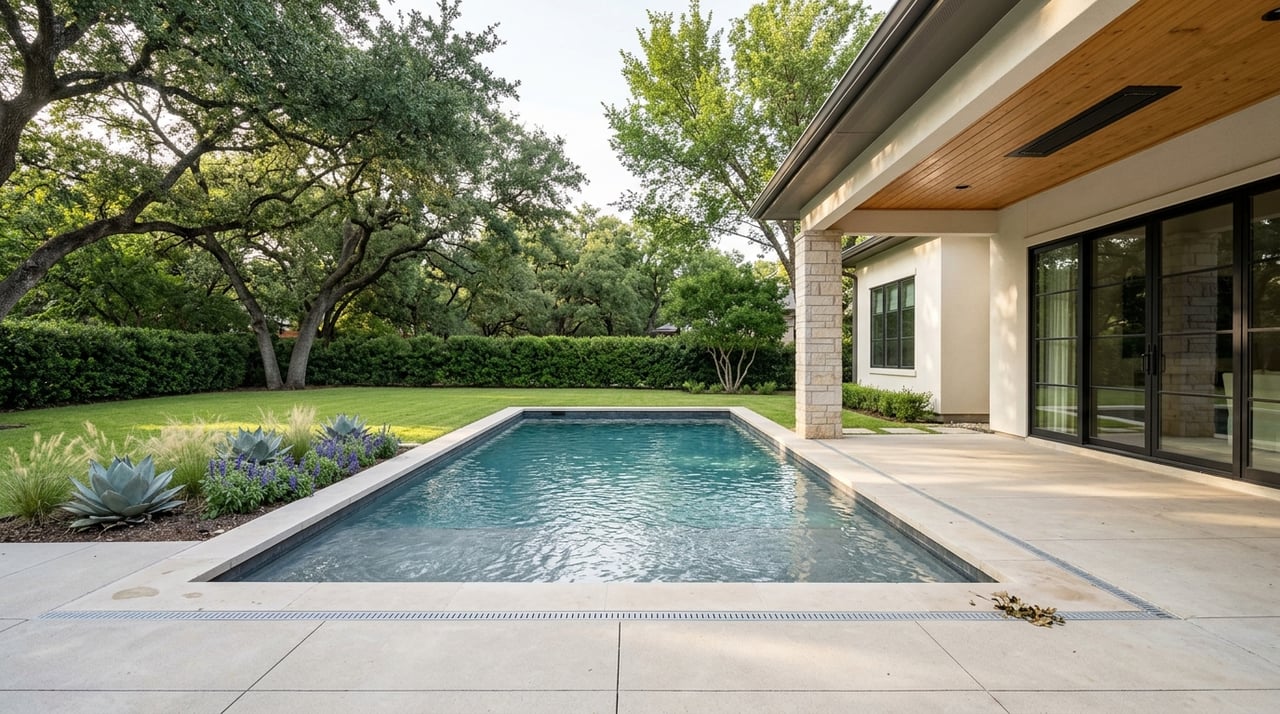
Living On Or Near The Golf Course In Great Hills
July 2, 2026
July 2, 2026
If you like the idea of golf course living but do not want a neighborhood that feels manufactured or isolated, Great Hills stands out. This part of northwest Austin blends mature trees, rolling terrain, and a long-established residential feel with practical access to shopping, dining, and major roads. If you are considering a home on or near the course, it helps to know what daily life is really like, what questions to ask, and what to verify before you buy. Let’s dive in.
Great Hills is not a newer master-planned golf community built around one uniform housing style. The neighborhood grew from the 1970s forward, and today it is known for wooded streets, hilly topography, scenic views, and a broad mix of homes.
At the center is Great Hills Country Club, a private, member-owned club established in 1973. The 18-hole course was designed by Don January and Billy Martindale, with an open ridge-side front nine and a back nine that follows creeks and streams. That layout shapes the setting in a big way, especially for homes with fairway, creek, or greenbelt adjacency.
For you as a buyer, that means golf course living here often feels more natural and tucked in than in newer developments. Mature landscaping and elevation changes create privacy and visual separation, even when homes are close to each other.
Not every home in Great Hills offers the same relationship to the course. Some properties back directly to fairways or greens, while others sit a few streets away and still benefit from the neighborhood’s golf-oriented identity.
That distinction matters. A home that is truly on the course may offer more direct views and a stronger sense of openness, while a home near the course may give you similar access to the area’s character without being immediately adjacent to play.
When you tour homes, it helps to ask very specific questions about the lot and orientation, including:
In Great Hills, those details can vary from one street to the next. Two homes with the same neighborhood label can deliver very different day-to-day experiences.
One of the biggest draws in Great Hills is the sense of seclusion. Even though the neighborhood sits near busy Austin corridors, the dense tree cover and established layout help many streets feel quiet and enclosed once you are home.
That is a major reason buyers are drawn here. If you value shade, mature landscaping, and a setting that feels settled rather than new, Great Hills checks a lot of boxes.
For golf course homes especially, the tree canopy can be part of the appeal. Instead of a fully exposed resort-like environment, many lots balance open views with natural screening.
This is one of the most important things to understand before you buy. Living in Great Hills does not automatically mean you have access to Great Hills Country Club.
The club is private and member-owned, and its materials show multiple membership pathways, including social, tennis, junior, and golf-oriented options. In other words, club access is something you should confirm separately from the real estate purchase.
If club amenities are important to you, ask these questions early:
The club is also moving forward with a $22.3 million enhancement plan, which points to continued reinvestment in amenities. For buyers who want an active club lifestyle, that can be a meaningful part of the overall value proposition.
A nice surprise for many buyers is that Great Hills is not only about the country club. The neighborhood also benefits from Great Hills Neighborhood Park, which adds another layer of outdoor access and everyday usability.
The City of Austin lists the park at 10801 Sierra Oaks, with more than 86 acres. Trails, a playscape area, pavilion, picnic space, and exercise features help broaden the lifestyle appeal for residents who want more than time on the course.
That matters because your daily routine may include morning walks, time outdoors, or casual recreation that has nothing to do with golf. In Great Hills, the identity of the area is shaped by both fairways and parkland.
Some golf-oriented neighborhoods trade convenience for atmosphere. Great Hills tends to offer both.
The neighborhood sits near Highway 183 and Loop 360, which helps with access around northwest Austin and into other parts of the city. Great Hills Country Club describes itself as just minutes from downtown, and a current local brokerage guide places the area about 11 miles from downtown Austin and about 20 miles from Austin-Bergstrom International Airport.
Nearby shopping and dining also add to the appeal. The Arboretum, located at 10000 Research Boulevard, includes more than 40 shops and restaurants, and The Domain offers a much larger retail and dining destination with around 100 stores and restaurants, plus on-site hotels, parking, and dog-friendly amenities.
That combination can be especially helpful if you are relocating and want a neighborhood that feels established but still keeps everyday errands, dining out, and work access within reach. The tradeoff, as with many desirable Austin locations, is that rush-hour traffic is still part of the equation.
Golf course homes often come with extra lifestyle benefits, but they also come with details that deserve closer review. In Great Hills, a few checkpoints can help you avoid surprises.
This sounds simple, but it is worth verifying carefully. Marketing language can blur the line between golf course frontage and general neighborhood proximity.
Look at the survey, the lot placement, and the actual rear or side orientation of the property. A home may be part of the golf-course setting without directly touching the course.
If the home is in the Great Hills HOA, exterior changes may require prior ARC approval. That can affect plans for landscaping, paint, additions, fencing, or other visible improvements.
If you already know you want to update the exterior, add features, or make changes after closing, this is something to review early. It is much easier to understand the approval process before you buy than after you move in.
School zoning in Great Hills should never be assumed based on the neighborhood name alone. A local brokerage guide notes that properties in Great Hills may fall into either Austin ISD or Round Rock ISD depending on the specific address.
The practical takeaway is simple: confirm the exact assignment for the property you are considering. If school district matters to your home search, address-level verification should be part of your due diligence.
Views matter, but so does function. In a hilly neighborhood like Great Hills, some lots offer expansive outlooks, while others may have steeper grades, more tree coverage, or different backyard usability.
As you compare homes, consider:
These are the kinds of details that shape your long-term satisfaction with the property.
Great Hills is a strong fit if you want a wooded, established northwest Austin setting with a clear neighborhood identity. It tends to appeal to buyers who value privacy, outdoor space, club amenities, and quick access to retail and major roads.
It can be especially compelling for relocating professionals who want a more grounded neighborhood feel, as well as move-up buyers looking for mature landscaping and larger homesites than they may find in newer communities. The lifestyle here leans suburban and amenity-rich, not dense or urban.
That said, the right fit depends on your priorities. If your goal is a polished but relaxed setting with golf nearby, strong outdoor character, and everyday convenience, Great Hills deserves a close look.
Living on or near the golf course in Great Hills is less about a flashy resort experience and more about balance. You get a private club setting, mature trees, rolling terrain, and broader access to parks, shopping, and city connections that make day-to-day life easier.
The key is knowing exactly what you are buying. Course frontage, club access, HOA guidelines, and school assignment can all differ by property, and those details matter just as much as the view.
If you want help comparing homes in Great Hills or narrowing down which streets and lots best match your lifestyle, Liz King offers local, hands-on guidance tailored to northwest Austin buyers and sellers.
Stay up to date on the latest real estate trends.
With Liz, it’s not just about the sale—it’s about the relationship. She takes the time to understand your goals, then works tirelessly to help you achieve them.